 Lumi
Lumi
A goodbye routine that works
- Keep it short. The longer you linger, the longer the hard part lasts.
- Do it the same way every day. Same door, same words, same hug.
- Give your full attention, then go. Say goodbye warmly and leave, even if there are tears.
- Come back when you said you would. Kept promises are what build trust.
- Say when in your child’s terms. “After nap” or “after snack” means more than “at three o’clock.”
- Practice. Short stays with a grandparent or a friend before the first day make the real thing easier.
Separations are harder when a child is hungry, tired or sick, so expect a rough morning after a bad night.
One exercise for easier goodbyes
Do it at home, on a calm day. It gives your child something to carry into the classroom.
A note on the bracelet: use large beads on a cord that breaks under a pull, and check with the teacher first, since many preschools don’t allow jewelry. For a 3-year-old, a bracelet drawn on the wrist works just as well.
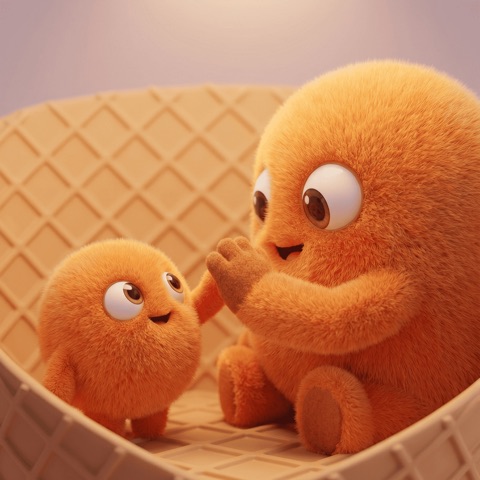
Secret Handshake
This exercise creates a special “code” for your relationship. A shared secret ritual helps your child feel that they belong, that they’re special to you, and that your family is a team. In hard moments, the handshake can become a small signal: “I’m safe. I’m not alone.”
- Start the Secret Team. Explain that strong teams often have a secret sign that only they understand. Now you and your child will create your own.Say: “Every great team has a secret code. Let’s make our own special handshake. It’ll be something only we know. It’ll remind us that we’re on the same team.”
- Choose the Moves. Invite your child to choose 3–4 simple moves: clap, fist bump, high five, elbow tap, shoulder bump, or a funny ending. If your child doesn’t like being touched, use no-touch moves: an air high five, a wave, a wink.Say: “What should be in our code? Maybe a clap, a fist bump, a high five, and then something silly. You choose the moves. We can use no-touch moves too. And you can always say “stop.””
- Add a Secret Meaning. Give one or two moves a secret meaning. For example, the final high five could mean “I’m with you,” and the fist bump could mean “We can handle this.”Say: “Let’s give one move a secret meaning. When we touch palms at the end, it can mean “I’m here with you.” What should our secret move mean?”
- Team Practice. Practice the handshake slowly, then faster. This builds attention, playfulness, and connection.Say: “Let’s practice our secret code three times. First slow, like sleepy turtles. Then a little faster, like bunnies. Now super fast, like lightning! We’re getting good at working together.”
- Use It When Needed. Agree when you’ll use the handshake: in the morning, at bedtime, or when your child feels worried or sad. Let your child decide where it’s okay to use it, since some kids feel shy around friends. When your child gives the signal, always answer. After the handshake, gently ask what’s going on.Say: “Now this is our secret signal. If you feel sad or worried, show me the first move. I’ll always answer. Then we can talk. Our code means you’re not alone.”
- Courage Bracelet · 20 minutes. This exercise helps children make a reminder of their inner strength that they can hold and touch.
- Courage Ladder · 15 minutes. This exercise helps children turn a scary goal into a clear path of small steps.
When to talk to the pediatrician
Talk to your pediatrician if your child isn’t adapting to being without you, if the distress lasts for weeks without easing, or if it shows up as stomachaches, trouble sleeping or refusing school.
A rough night makes the next goodbye harder. A steady bedtime routine helps, and so does knowing what to do about night terrors and nightmares.
Lumi is a set of self-help exercises for families. It isn’t a treatment and doesn’t replace a pediatrician or a child psychologist. In an emergency, call 911. For a mental health crisis, call or text 988.
Sources
- How to Ease Your Child’s Separation Anxiety, American Academy of Pediatrics, HealthyChildren.org.
Questions parents ask
Is separation anxiety normal at age 4?
Yes, crying at drop-off is common at 3, 4 and 5. The American Academy of Pediatrics notes it is rare for separation anxiety to persist daily after the preschool years.
Should I sneak out or say goodbye?
Say goodbye. Keep it short and warm, do it the same way every day, and come back when you said you would.
How long does separation anxiety last at drop-off?
For most children it eases over the first weeks as the routine becomes familiar. Talk to your pediatrician if it lasts for weeks without easing.