 Lumi
Lumi
How to use a feelings wheel
- Start on a calm day. Spin through the wheel together and act out each face. Ask “when did you feel this last?”
- Ask “which one?” before “what happened?” In a hard moment, a child can point even when they can’t talk.
- Add the size. Once the feeling is named, ask how big it is, from a tiny 1 to a huge 5. Our feelings chart has that scale.
- Name yours too. “I’m on worried today.” Children learn the words by hearing adults use them.
The CDC’s emotion coaching steps follow the same order: notice, connect, listen, name, then find a solution. Naming the emotion out loud “in simple, descriptive words” is the step a wheel makes easy.
Why eight feelings, not forty
Adult feelings wheels often have dozens of words. For a 4-year-old that is noise. Eight broad feelings cover almost everything a young child meets in a day, and the pairs on the wheel (sad next to calm, angry next to scared) help a child notice that feelings sit close to each other and change.
One exercise that goes with the wheel
It is from Lumi and also appears on the feelings chart page; it turns pointing into a skill.
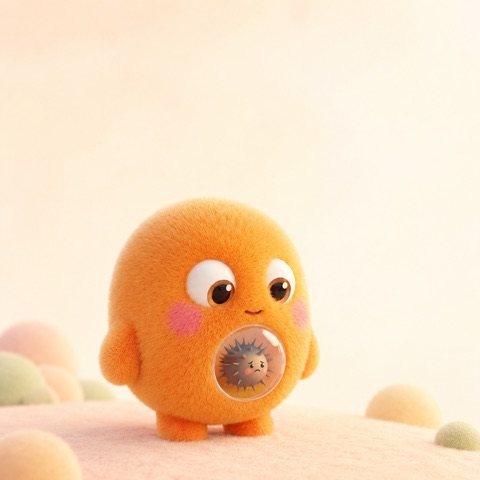
Where Does This Feeling Live?
This exercise helps children connect feelings with body sensations. When a child learns to find where a feeling “lives” in the body, the feeling often becomes less overwhelming. The child learns to notice body sensations without fighting them. If focusing on the body makes your child more upset, stop and switch to something outside: name three things you can see.
- A Visitor Has Arrived. Explain that every feeling visitor, like Anger, Fear, Sadness, or Worry, likes to stay somewhere in the body. Together, you’ll look for where it’s staying right now.Say: “It looks like a feeling visitor has arrived. Let’s find where it’s staying in your body right now. Ready to look?”
- Search the Body’s Rooms. Gently check the main “rooms” of the body together: the belly, chest, throat, shoulders, hands, and face.Say: “Let’s look in your tummy first. Is it calm, tight, jumpy, or twisty? Now put a hand on your chest. What do you notice there? Maybe the visitor is in your shoulders or hands.”
- Describe the Visitor. Once the place is found, describe the feeling there. Use kid-friendly comparisons: heavy like a stone, prickly like a cactus, shaky like jelly, warm like cocoa.Say: “Oh, you found it! What is it like there? Is it hard or soft? Heavy or light? If we could color it, what color would it be?”
- Let the Visitor Stay. This is the part where we let the feeling be. We’re not trying to kick it out. We simply say, “Yes, it’s here,” and let it stay for a while.Say: “Let’s say to this feeling, “Hi. I know you’re here. You can stay for a bit. I’m not pushing you away.” What do you notice now?”
- Breathe Toward That Place. Invite your child to send a soft breath toward the place where the feeling lives. This isn’t to make the feeling disappear. It’s to care for the body while the feeling is there.Say: “Take a slow breath and imagine your breath out is a soft cloud around the feeling. We’re just breathing near it. How does your body feel now? If it still feels big, that’s okay.”
- Emotion Thermometer · 5 minutes. This exercise teaches children to measure how strong a feeling is, turning it from something overwhelming into something they can understand.
If the wheel gets used mostly for one feeling, follow it: anger activities if it is angry, calming strategies if it is worried or scared.
Lumi is a set of self-help exercises for families. It isn’t a treatment and doesn’t replace a pediatrician or a child psychologist. In an emergency, call 911. For a mental health crisis, call or text 988.
Sources
- Tips for Noticing and Naming Emotions, Essentials for Parenting Toddlers, Centers for Disease Control and Prevention.
- 4 Play Activities to Help Children Manage Emotions, American Academy of Pediatrics, HealthyChildren.org, updated 2023.
Questions parents ask
What is a feelings wheel for kids?
A circle divided into feelings, so a child can point to how they feel before they have the words. This one has eight feelings for ages 4 to 8 and prints on one page.
How do you use a feelings wheel with a child?
Go through it together on a calm day and act out each face. In a hard moment, ask “which one?” before “what happened?”, then ask how big the feeling is.
What age is a feelings wheel for?
This wheel is written for ages 4 to 8. Younger children can point at the colors and faces; older children can add their own words around the edge.
Is a feelings wheel the same as a feelings chart?
They do the same job in different shapes. A wheel shows that feelings sit next to each other and change; a chart adds a 1 to 5 scale for how big the feeling is. We make both with the same eight feelings.