 Lumi
Lumi
The five skills
The CASEL framework, which most U.S. school SEL programs follow, names five competencies:
- Self-awareness: understanding one’s own emotions, thoughts and values and how they influence behavior.
- Self-management: managing emotions, thoughts and behaviors in different situations, and working toward goals.
- Social awareness: understanding the perspectives of others and empathizing with them.
- Relationship skills: establishing and keeping healthy, supportive relationships.
- Responsible decision-making: making caring and constructive choices about behavior.
CASEL also notes that evidence-based SEL programs are more effective when they extend into the home. That is the whole point of this page.
One exercise for each skill
Start with the first one, in full below. One exercise, repeated, is worth more than five tried once.
Self-awareness: What Matters to Me Today?
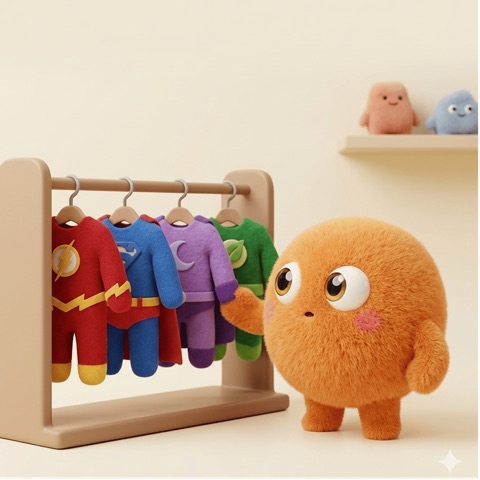
What Matters to Me Today?
This exercise helps children choose what kind of person they want to be today. Instead of following every mood, they pick one hero power for the day, like kindness, courage, patience, or honesty, and practice showing it through one small action.
- Check In With Your Feelings. In the morning, ask your child which feeling visitor has arrived today. It might be Tiredness, Joy, Worry, or Boredom.Say: “Let’s check in. Which feeling woke up with you today? If Tiredness is here, that’s okay. We don’t need to send it away. We just notice it.”
- Choose Your Hero Power. Invite your child to pick one hero role for the day, like Kind Helper, Brave Friend, Patient Explorer, Honest Hero, or Gentle Friend. Let your child choose. This isn’t a behavior chart.Say: “Heroes get to pick a special power for the day. What will yours be? Maybe Kind Helper, Brave Friend, or Patient Explorer?”
- Make a Tiny Plan. Talk about one small action that could show this hero power. A value isn’t just a word. It’s something we do.Say: “If you’re a Kind Helper today, what’s one small thing you could do? Maybe help set the table, share a toy, or use a kind voice.”
- Say It Out Loud. Ask your child to say their hero power out loud. This helps them remember it later.Say: “Let’s say it out loud: “Today I’m a Kind Helper!” These words can help you find your way, like a compass. If a tricky feeling shows up later, you can remember them.”
- Evening Check-In. At the end of the day, talk about moments when your child used their hero power. Keep it light and curious, not a test. If they forgot, that’s okay. Tomorrow is a new try.Say: “When did you use your hero power today? Were there times when feelings got loud, but you still remembered it? If you forgot, that’s okay. Tomorrow is a new try.”
The other four skills each have an exercise in Lumi:
- Self-management: Stone Hands, Cloud Hands, 5 minutes. Tense and release the hands to feel the difference between tight and relaxed.
- Social awareness: Mirror, 10 minutes. Copy your child’s movements and faces, then swap.
- Relationship skills: Bridge of Trust, 15 minutes. Practice asking for what you need in a clear, kind way.
- Responsible decision-making: Family Crest, 30–40 minutes. Draw what matters to your family and choose what to do when it is hard.
Making it stick
- Use the school’s words. If your child’s class says “yellow zone” or “I-statement”, say the same at home. See color zones at home.
- Put the tools where the feelings happen: a feelings chart on the fridge, a calm-down corner.
- Narrate your own skills out loud. “I’m frustrated, I’m going to take two breaths before I answer.”
Lumi is a set of self-help exercises for families. It isn’t a treatment and doesn’t replace a pediatrician or a child psychologist. In an emergency, call 911. For a mental health crisis, call or text 988.
Sources
- What Is the CASEL Framework?, Collaborative for Academic, Social, and Emotional Learning.
- Tips for Noticing and Naming Emotions, Centers for Disease Control and Prevention.
Questions parents ask
What are SEL activities?
Activities that practice social and emotional skills: noticing feelings, calming down, understanding others, keeping friendships and making good choices. Schools teach them on purpose; this page gives five to do at home.
What are the 5 SEL skills?
In the CASEL framework: self-awareness, self-management, social awareness, relationship skills and responsible decision-making.
How do I do SEL at home with a 5-year-old?
Pick one exercise, repeat it on calm days, use the same words the school uses, and name your own feelings out loud so your child hears the vocabulary.
Does SEL at home work?
CASEL notes that evidence-based SEL programs are more effective when they extend into the home. The exercises here are the home half of that.